
Under the cash basis of accounting, revenue is recognized when cash is received; expenses are recorded when they are paid in cash. The determination of income thus rests upon the collection of revenues and the payment of expenses, rather than upon the earning revenues and the incurring of expenses. One of the community manager’s primary goals should be to protect the association’s assets with financial procedures of checks and balances, to minimize risk of errors and losses. The optimal level of internal control is when no one person has responsibility or access to more than one function of the financial operation. An example would be to ensure that neither the accounts payable department (the person who writes the checks) nor the accounts receivable department (the person who enters the money received) reconcile the bank statement. The CPA will also conduct an inspection of your HOA’s minutes and contracts for errors.
As a member of your association’s Board of Directors, it’s your job to know and understand these key financial concepts and safeguards, in order to better protect your community’s funds and properly serve your fiduciary duty. Ethics and compassion should guide your judgment, particularly when it comes to homeowners and the honest maintenance of financial records. In the end, you want to make your community a beautiful and financially sound place to live for all residents. Under the Accrual Basis, all financial activities are reported on the HOA’s financial statements.
General ledger and financial reporting
Your HOA board has a duty to manage the association’s finances correctly. In some cases, members of the community might take legal action against your board for mismanagement. And, although state laws and your governing documents might offer you some protection, court rulings may still find you personally liable for poor HOA accounting and financial management.
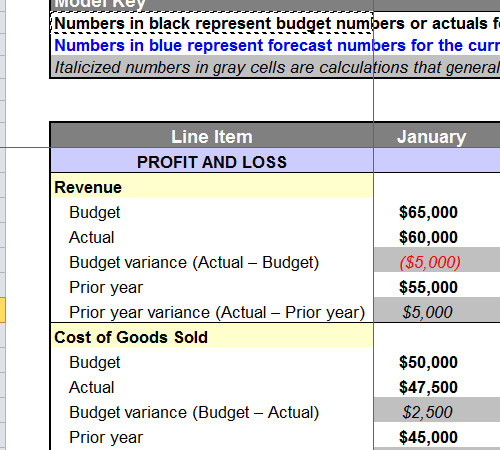
His CPA firm, James Ernst Accounting, has been providing accounting and tax services since 1993, and he specializes in providing professional services for the homeowners association industry. Since the annual operating budget is required to be prepared on the Accrual Basis, then the Income Statement should be prepared on the same basis. Remember, the Income Statement compares the actual revenues and expenses that are reported for the period with the estimated revenues and expenses that were reflected in the budget for the same period. For example, when a homeowners association incurs an expense, they will record the expenditure on the left side of the ledger as a debit.
CINC Systems Announces the Launch of TresRE, a suite of treasury … – PR Newswire
CINC Systems Announces the Launch of TresRE, a suite of treasury ….
Posted: Tue, 06 Jun 2023 07:00:00 GMT [source]
As one of the main aspects of bookkeeping, maintaining a General Ledger must be intrinsic to HOA accounting rules. A General Ledger holds the accounting records for all transactions within the association. The entries must be organized in order of account number — which is uniquely assigned to each account title (chart of accounts) — and by date. Finally, equity refers to accumulated profits and money from investors. For a homeowners association, it usually consists of retained earnings and the reserve account’s remaining balance.
Budgeting and forecasting
The three steps of recording, classifying, and summarizing form the basic process by which accounting data are created. These procedures are carried out in accordance with a set of rules and conventions which have been developed over time. A thorough knowledge of the rules and standards is necessary for a complete understanding of the data and the manner in which they are accumulated. The right HOA accounting software shouldn’t offer cookie-cutter solutions. On the contrary—a premium HOA software platform should bring consistency to what’s working and help eliminate what isn’t. Volunteer board members in a self-managed HOA aren’t always seasoned accounting experts.
Bank reconciliation is a process that compares the balance shown in the HOA’s financial records to the same account’s balance, as reported on a bank statement. Reconciliation can uncover errors or omissions that may be causing a discrepancy between these two figures. When using the Cash Basis for your HOA accounting standards, you only report revenues once actual cash has come in.
Accounts payable and receivable
Board members are also encouraged to stay in contact with vendors that they regularly work with. It doesn’t hurt to see if they are in a position to offer discounts or deals to long-term clients, but if you don’t ask, they probably won’t bring it up. By communicating regularly with vendors, you won’t be surprised if service prices increase. The board will also have an opportunity to look for a new service provider if they know in advance that a current partner is increasing their prices. Disorganized HOA management can lead to increased risk and potential liability issues. HOA software can play a crucial role in creating consistency, organization, and transparency that reduces risk.
- If necessary, they may take extra steps to adjust any entries before compiling and preparing your financial reports.
- Out of the three HOA accounting methods, the Accrual Basis is also the only basis that conforms with GAAP.
- From clearing snow to keeping the lights on in the clubhouse, HOAs need to have money available for day-to-day expenses as well as significant projects.
- For those unfamiliar, accounting is carried out using a double-entry system, meaning that an entry on one side of the ledger must be matched by another entry on the other side of the ledger.
- In that case, that means that both internal and external parties can have more confidence that the financial statements are a faithful representation of the truth.
This extensive review requires an independent accountant to review association documents, statements, invoices, and budgets to ensure accuracy and compliance. The Cash Basis doesn’t conform with GAAP, which means it’s an unacceptable method when preparing your official Hoa accounting financial statements. Additionally, it breaks down all of the association’s income and expenses. The Statement of Income & Expense must also include year-to-date figures. That way, it can depict your HOA’s financial standing for both the month and the year thus far.
Download a FREE eBook “CAM Accounting 101”!
They may also divide their time between managing the HOA and other responsibilities. The first place to start your HOA accounting transition process is for your Board to have reviewed our proposal and our service agreement, had your questions answered and decided to work with us. Community Financials offers our clients a simple and inexpensive way to avoid paying attorneys for delinquent fees and their costs which they may or may not recover for the association. An HOA Financial Statement is an official record that details all the HOA or condo association’s financial activities. HOA demand fees are the unpaid debts that must be paid to the association before a homeowner can sell their property. Furthermore, the board can use this report to compare actual expenses incurred versus the budget allocated.

The first method of accounting is the Cash Basis, which records income and expenses only when actual cash is tendered. In terms of revenues, the association records them when it earns them, not when it receives them. An asset section of the Balance Sheet titled Assessments Receivable appears. As the association receives payments, the cash balance increases while Assessments Receivable decreases or Prepaid Assessments increases. For starters, if there is consistent record keeping, association directors can look back on previous financial years to identify patterns that could affect the current budget and adjust accordingly. If detailed records are not kept, it can be near-impossible to keep track of delinquent dues or know how much money is available to budget for community maintenance and new projects.
Cash Basis
Normally cash budgets are prepared for each month of the budget period; however, if large inflows or outflows of cash occur at particular times during a month, the interval may be changed to reflect these special situations. The manager needs information about the extremes of the cash position; these extreme points do not always occur at the end of the month. The Balance Sheet reports the financial position of the association by disclosing the amount of cash the association has in the bank, cash in savings or other investments, the amount of dues uncollected and other receivables. The Balance Sheet reports the association’s liabilities or other financial obligations and sets forth the association’s allocation of reserves. A review includes everything described above in compilation, but also includes a more analytical look at your association’s financial records.
The CPA must verify that all the information in the HOA’s reports is correct. This includes calling debtors to see how much people owe to the association. The CPA will also call creditors to confirm how much the association owes. HOA accounting software can make managing finances and other aspects of the community easier, more consistent, more intuitive, and more transparent, with less risk and more immediate value for homeowners. Volunteer board members fulfill their HOA duties around work and family obligations.
Making things worse, the world is now in the second year of the Covid-19 pandemic, complicating HOA accounting and collections processes even further. The reserve account consists of funds set aside for the repair or eventual replacement of capital components. This could include re-paving a road in an HOA or a roof replacement in a condominium building. A compilation only involves the collation and surface-level checking of records. It also differs from a review, which is a slightly superior form of compilation. Money comes in, money goes out, and everything is recorded accordingly.

There is also a multitude of services available from CSM to help homeowner’s associations organize and prepare their own financial statements. One of the best homeowners association accounting rules to adopt is to exercise internal controls. That means not letting a single person have control over every financial department. Ideally, the person who writes the association’s checks should be different from the person handling receivables. The general ledger is a centralized record of the homeowners association’s transactions. Each listing should include important information such as the transaction date, the amount, and the accounts involved.
HOA Q&A: Can a board president withhold community financial info? – TCPalm
HOA Q&A: Can a board president withhold community financial info?.
Posted: Sat, 17 Jun 2023 07:00:00 GMT [source]
Luckily, our experts are on hand today to help you find out more about homeowners’ association (HOA) accounting software and the benefits this could offer for your association. Do you currently self-manage your condo community or homeowners’ association? Hiring Condo & HOA self-management support services will reduce the time required to be a Board member. As a Board member, do you currently get access to the software where your community data is stored? Do you have a library of prior financial statements you can view online?